The Good | U.S. Jails Ransomware Actors, Extradites Alleged RedLine Operator
The DoJ has given Russian national, Aleksey Volkov, almost seven years in person and ordered him to pay full restitution for acting as an initial access broker in Yanluowang ransomware attacks. Between 2021 and 2022, he breached multiple U.S. organizations and sold network access to affiliates who deployed ransomware and demanded payments up to $15 million. Arrested in Italy in 2024 and later extradited, Volkov pleaded guilty in 2025. Investigators have since tied him to over $9 million in losses using digital evidence, including chat logs and iCloud data.
For Ilya Angelov, a fellow Russian citizen, U.S. courts have doled out two years in prison for co-managing a phishing botnet used to enable BitPaymer ransomware attacks against 72 major companies across the States. From 2017 to 2021, the crime group known as TA551 distributed malware via massive spam campaigns, infecting thousands of systems daily and selling access to other cybercriminals. These operations generated over $14 million in ransom payments. Angelov later traveled to the U.S. to plead guilty following the Russian invasion of Ukraine in 2022 and has been fined $100,000 on top of his sentence.
Law enforcement have also extradited Hambardzum Minasyan to the United States to face charges for allegedly helping to operate the RedLine infostealer malware service. According to the prosecution, the Armenian national managed RedLine’s infrastructure, including servers, domains, and cryptocurrency accounts used to support affiliates and distribute malware as well as laundered the illicit proceeds. The operations enabled large-scale data theft from infected systems, targeting corporations and individuals. He now faces multiple cybercrime charges and could receive up to 30 years in prison if convicted.

The Bad | Hackers Deploy FAUX#ELEVATE Malware via Phishing Resumes
Cyberattackers have set their sights on French-speaking professionals, luring victims with fake résumé attachments in an active phishing campaign designed to deploy credential stealers and cryptocurrency miners. The activity, now tracked as FAUX#ELEVATE, relies on heavily obfuscated VBScript files disguised as CV documents, which execute silently while displaying fake error messages. The malware uses sandbox evasion, persistence techniques, and a domain-check mechanism to ensure only enterprise systems are infected.
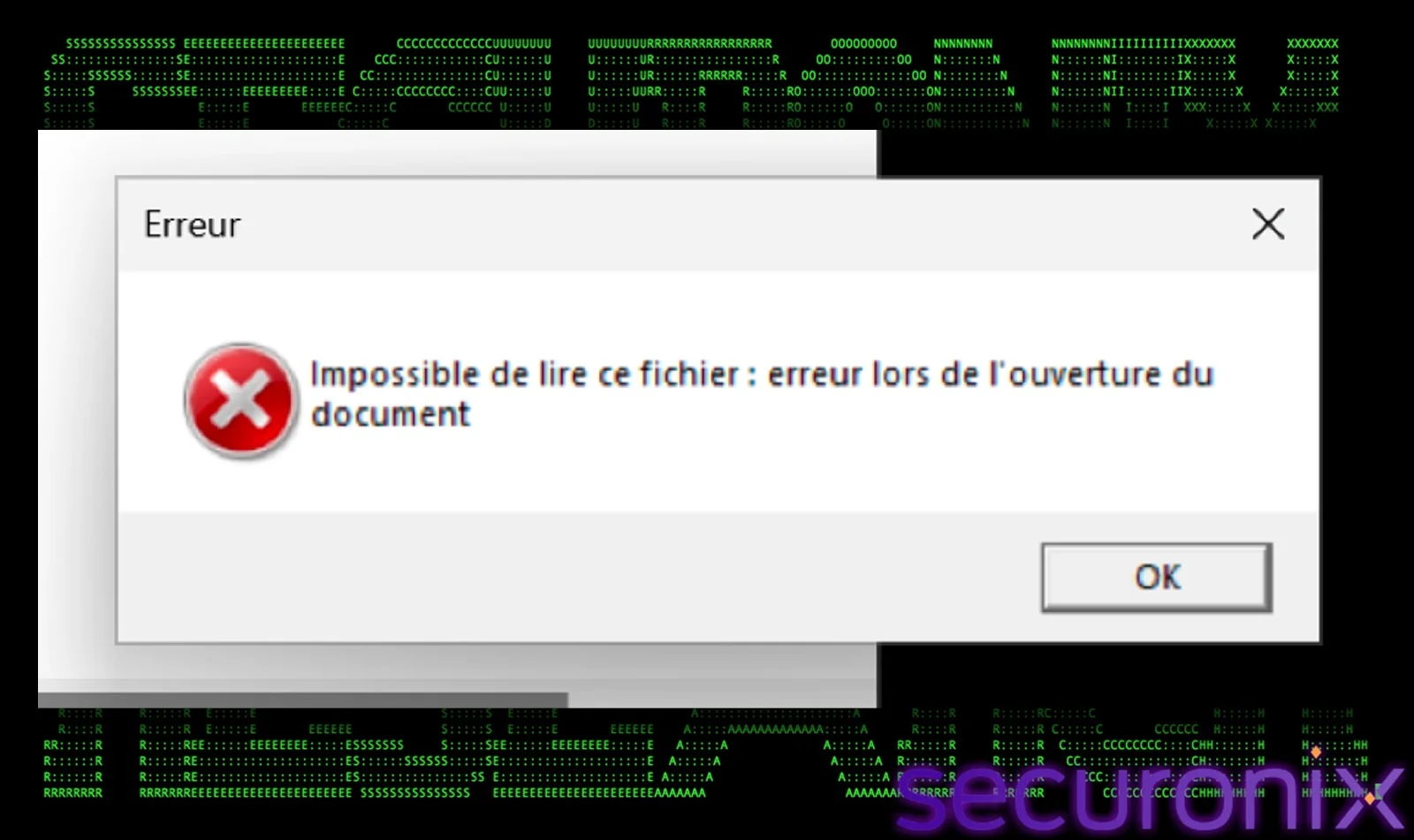
Once the attackers gain elevated privileges, the attack then disables security defenses, modifies system settings, and downloads additional payloads from legitimate platforms and infrastructure like Dropbox, Moroccan WordPress sites, and mail[.]ru. This abuse of valid services allows the attackers to stage the payloads, host a command and control (C2) configuration, and exfiltrate browser credentials and desktop files.
The campaign stands out for its “living-off-the-land” approach, which is defined by blending malicious activity with trusted services to evade detection. It also uses advanced techniques to bypass browser encryption and maximize system resource exploitation. After execution, most artifacts are removed to limit forensic visibility, leaving only persistent mining and backdoor components.
Notably, the entire infection chain executes in under 30 seconds, enabling rapid compromise and data theft. By selectively targeting domain-joined systems, attackers ensure high-value corporate credentials are harvested, making the campaign particularly dangerous for enterprise environments.
Campaigns like FAUX#ELEVATE show that even heavily obfuscated malware still presents multiple choke points for detection, from malicious scripting chains and abuse of legitimate services to anomalous outbound traffic. A modern, capable EDR with strong behavioral detection and endpoint visibility can detect and stop activity like this despite the obfuscation.
The Ugly | TeamPCP Hijacks Trivy, npm, and LiteLLM to Steal Credentials Worldwide
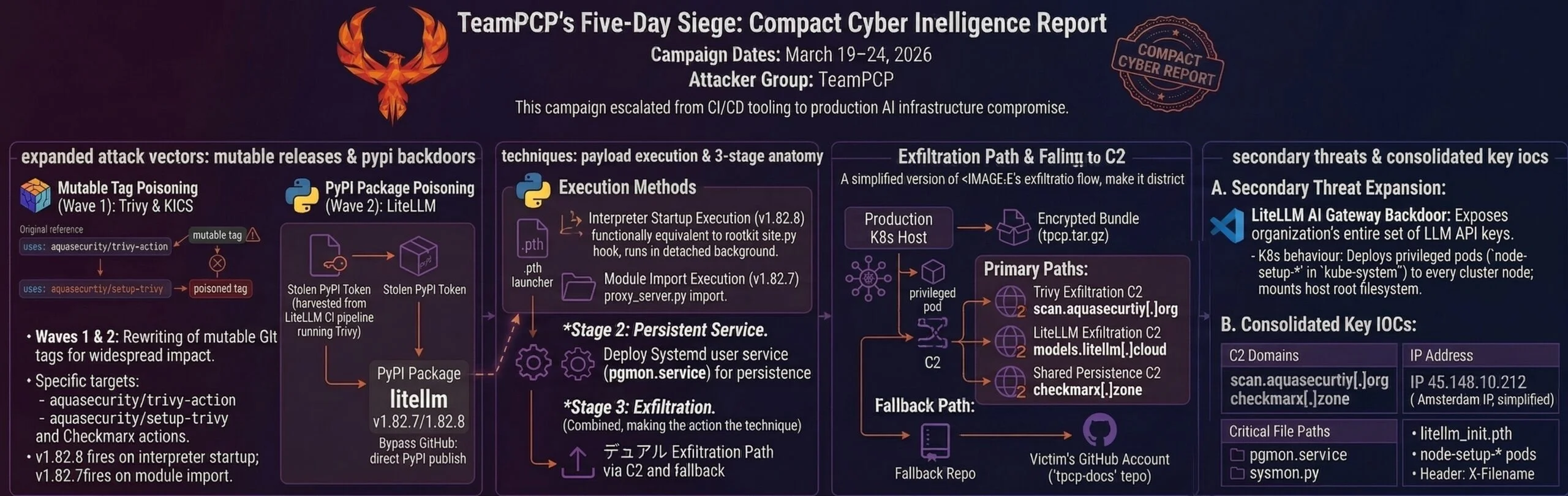
Over the past week, a cloud-focused threat actor called TeamPCP orchestrated a multi-stage, global supply chain campaign, beginning with a compromise of the widely-used Trivy vulnerability scanner. By injecting malicious code into Trivy v0.69.4 and associated GitHub Actions, TeamPCP harvested credentials, SSH keys, cloud tokens, CI/CD secrets, and cryptocurrency wallets. The malware persisted via systemd services and exfiltrated stolen data to typosquatted or attacker-controlled domains.
Following the Trivy breach, TeamPCP deployed CanisterWorm, a self-propagating npm malware that leveraged compromised developer tokens to infect additional packages. CanisterWorm used a decentralized ICP canister as a resilient dead-drop C2, enabling automated payload updates and credential theft without direct attacker interaction.
The group then expanded to Aqua Security’s broader GitHub ecosystem, tampering with private repositories and Docker images, and to Checkmarx workflows and VS Code extensions, using the same credential-stealing payload to cascade compromises across CI/CD pipelines. Kubernetes clusters have also been targeted with scripts that wiped machines in Iranian locales while installing persistent backdoors elsewhere, demonstrating both selective destruction and lateral movement.
In the most recent leg of the offensive, TeamPCP compromised the popular “LiteLLM” Python package on PyPI, embedding the same cloud stealer and persistence mechanisms into versions 1.82.7 and 1.82.8. The attack harvested credentials, accessed Kubernetes secrets, and installed persistent systemd services while exfiltrating data to infrastructure controlled by the attackers.
Across this cluster of linked incidents, TeamPCP’s operations highlight the danger of credential reuse, incomplete secret rotation, and weak CI/CD hygiene, pointing to how a single supply chain compromise can cascade into a multi-platform, multi-stage attack that spans open-source software, cloud services, and developer ecosystems.
from SentinelOne https://ift.tt/W3Lt9RU
via IFTTT


No comments:
Post a Comment