Last year I published the first version of my 7-stage roadmap which detailed how human workers adopt AI over time. It started with workers using AI as simple answer bots in 2024 and stepped through the incremental changes up through full AI-orchestrated work by 2028.
That roadmap was directionally correct, though my timelines where hilariously off. (My Phase 6, which I predicted for 2027+, accurately describes how I’ve been working every day since January 2026. In other words, what I thought would happen 18+ months in the future happened in only 6 months!)
I’ve also realized that the framing of last year’s roadmap could have been better. Last year, I focused each stage on what the AI does, which can make it hard to understand the impact. So for 2026, I changed the roadmap so it focused on how the worker uses the AI at each stage.
So let’s walk through the new 7 stages of human-AI collaboration (now with pictures!). As you read through this, think about where you are on this roadmap, but also where your users are. Also be aware that each stage incrementally builds on the one before it, and you can’t skip steps. (Of course different workers at the same company will all be at different stages. It will be pretty jagged for the next few years.)
Stage 1: AI as Faster Search

When workers first start using AI, it’s for simple “one-and-done” tasks like summarizing documents, writing emails, and answering questions. The worker types a question, gets an answer, and moves on. Most workers are still here. This is unchanged from my 2025 roadmap.
Stage 2: AI as a Thinking Partner
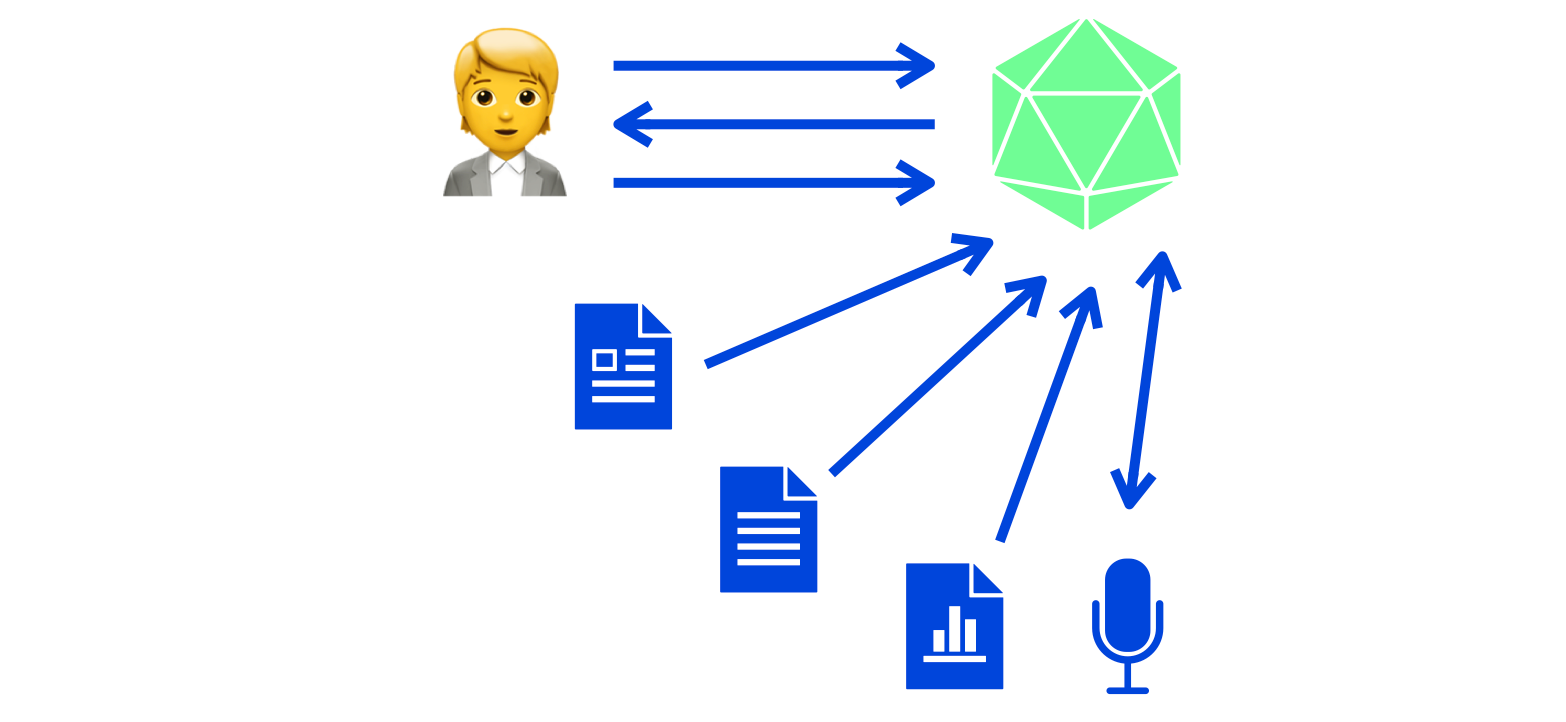
In Stage 2, workers start going back-and-forth with the AI instead of just asking one-off questions. This stage starts when workers load documents into conversations and start using the “projects” or “notebook” features to give the AI project-level context that’s shared across multiple chats. This is usually where people start talking or dictating to their AI instead of typing, and it’s usually where they have their first “aha” moment. Maybe 20% of workers are here today.
Stage 3: AI as a Cognitive Extension
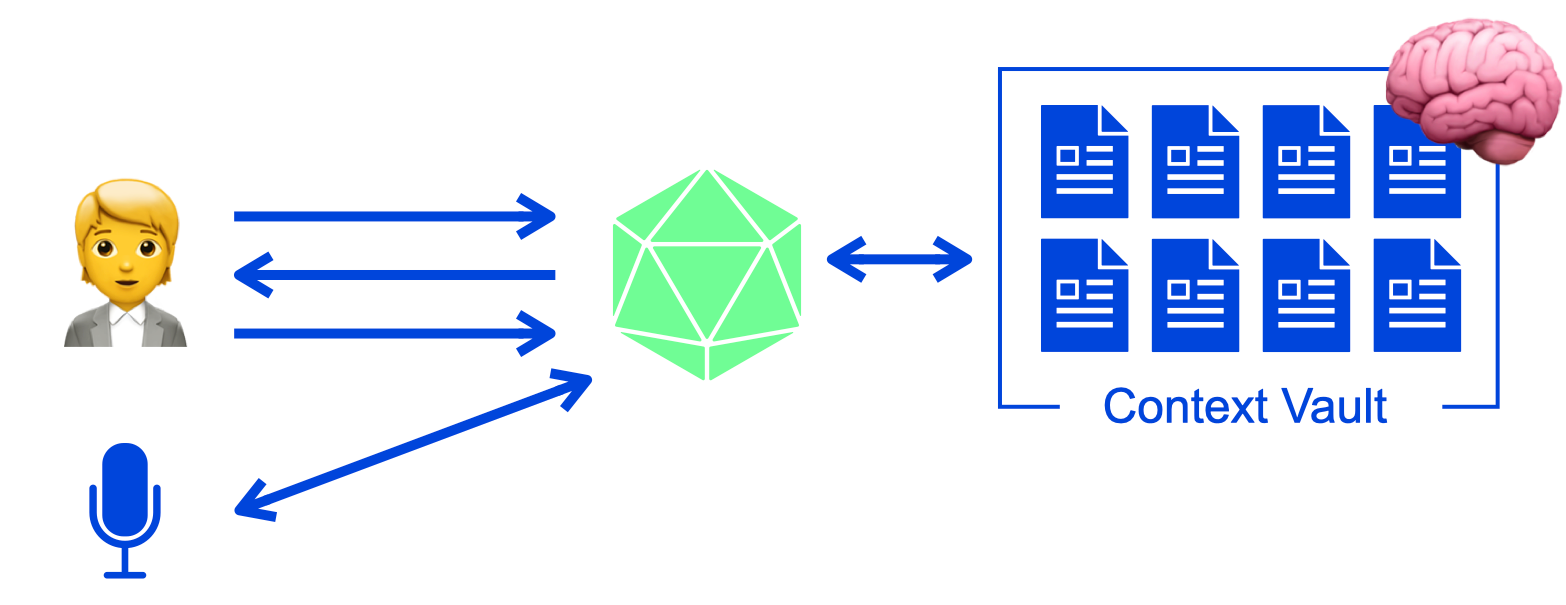
The jump to Stage 3 is when you stop bringing documents to the AI and instead flip it and start bringing your AI to your docs (and everything else). So instead of loading a few files into each conversation, you point your AI at all of it: documents, emails, notes, meeting transcripts, and the half-finished ideas you’ve been carrying around for months. (This is often referred to as a creating a “context vault”, “second brain”, or even “your own personal Wikipedia” which the AI has full read/write access to.)
At this point, AI stops being an occasional tool and instead becomes part of how you think. It holds your full context all the time, so you never start from a blank page, and it can connect something you said in a meeting today to a document you wrote two months ago.
I’ve personally been working this way since January and strongly believe using AI in this way is the future of knowledge work. (When I started, creating a second brain was a lot of work. But over the past six months, the AI labs have added capabilities and are making it so their products use a persistent vault as an out-of-the-box feature. In the meantime, I published a starter prompt you can paste into your AI which instructs it how to interview you to set up a second brain for you.
This stage is new for 2026 (second brains weren’t really a thing until January 2026), and the roadmap from here on out diverges from last year’s version.
Stage 4: AI as a Multi-Tool Agent
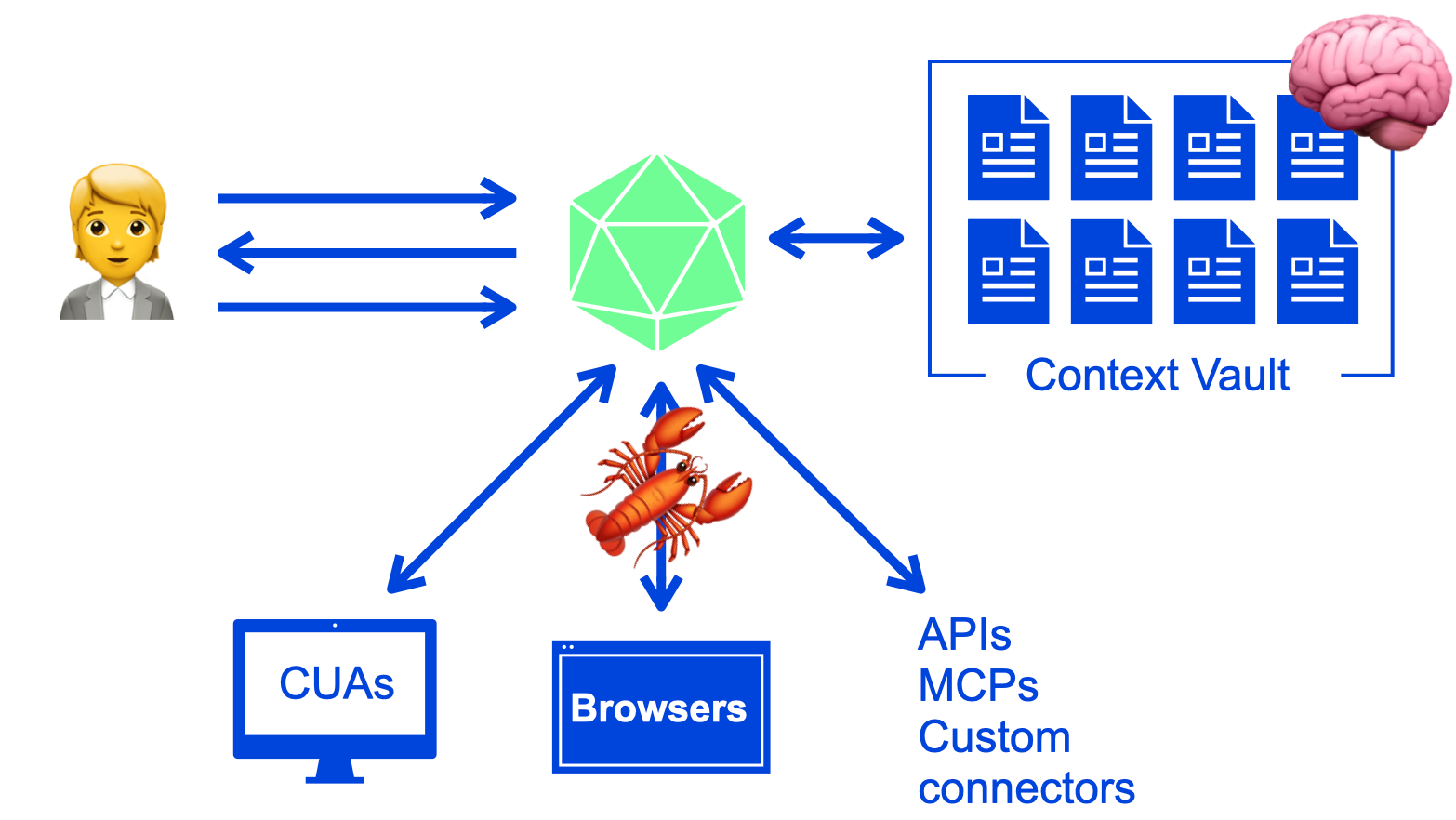
Once your AI has your persistent context, you’ll find yourself using it all the time but still just for conversations and thinking. The next step is to let the AI reach out into the world and do things. This is where computer-using agents (CUAs), browser operation, and MCP connections come in, along with specialized sub-agents for specific jobs. (People call this the “claws” of AI, since it can reach out into the world and do stuff.) At this point, the AI is “doing” more than “thinking.” It’s pulling data, filling out forms, running analyses, and driving the apps & websites to get you what you need to get your work done. (Note this is much more than “automations”.)
Since these “claws” are powered by a “brain” (from Stage 3), the AI is able to use its skills to know how to get things done, rather than the worker having to dictate each step. At this stage, apps start to feel like compatibility layers. Word, Excel, Outlook, and Teams are not where the work happens anymore, they’re just legacy interfaces AI uses when it has to.
Stage 5: AI as a Fleet
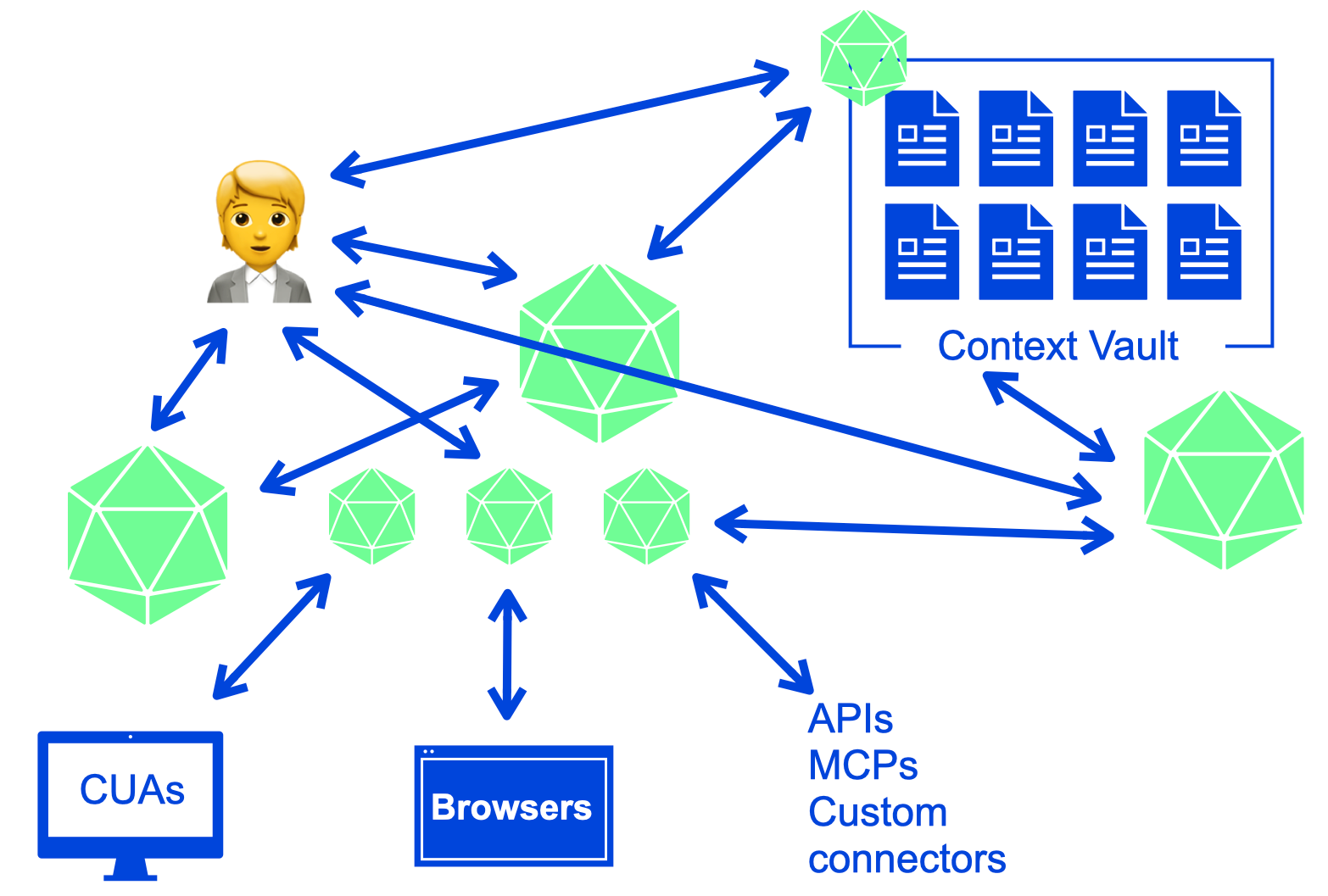
So far we’ve shown each worker using their own single AI. But in reality, workers will use multiple AI systems. Their primary AI might fire up sub-agents to fan out and complete tasks. Many apps and systems will have their own AI interfaces, and workers’ AIs will talk to and coordinate with other AIs just like human workers work with each other.
At this stage, workers aren’t doing as much raw work, instead they’re directing and coordinating work of various AI agents & systems. (In other words, everyone becomes a manager.)
Most people will find this stage genuinely uncomfortable, the same way first-time managers struggle to stop doing the work themselves. The skills that matter at this point will not be about how well you can do a task but how well you delegate, review, and decide what’s good enough.
Stage 6: AI as a Pod
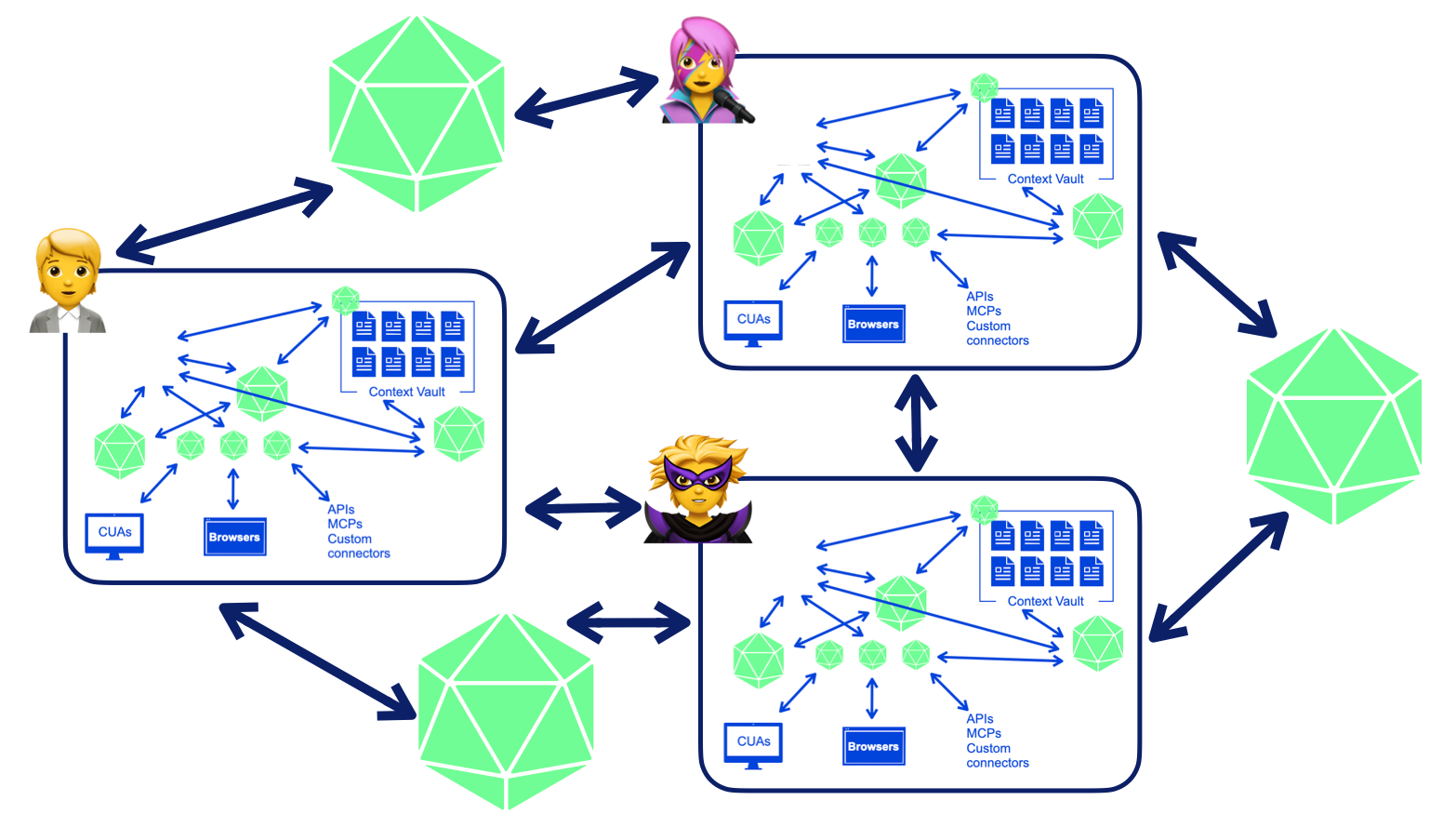
Stage 6 is another big one which really changes the shape of a job. Once you have a fleet of AI agents as outlined in the previous step, you realize that those AIs don’t have to stop working when you do. Agents can work overnight, coordinate with other agents, and get as much done as they can, queuing up questions and decisions needed for you whenever you next check in.
This is essentially where the model “flips”, where the AIs are doing the work, reaching out to the human as needed for guidance, rather than the human directing every step. This will happen across the workforce for many employees. Each employee will have their own pods, each with a fleet of agents, much of them doing work on their own.
At this point the unit of work stops being “one human worker for one 8-hour day” and evolves into a small team (one human plus a handful of agents) running more or less continuously.
Stage 7: The Published Self (Optional Fork)
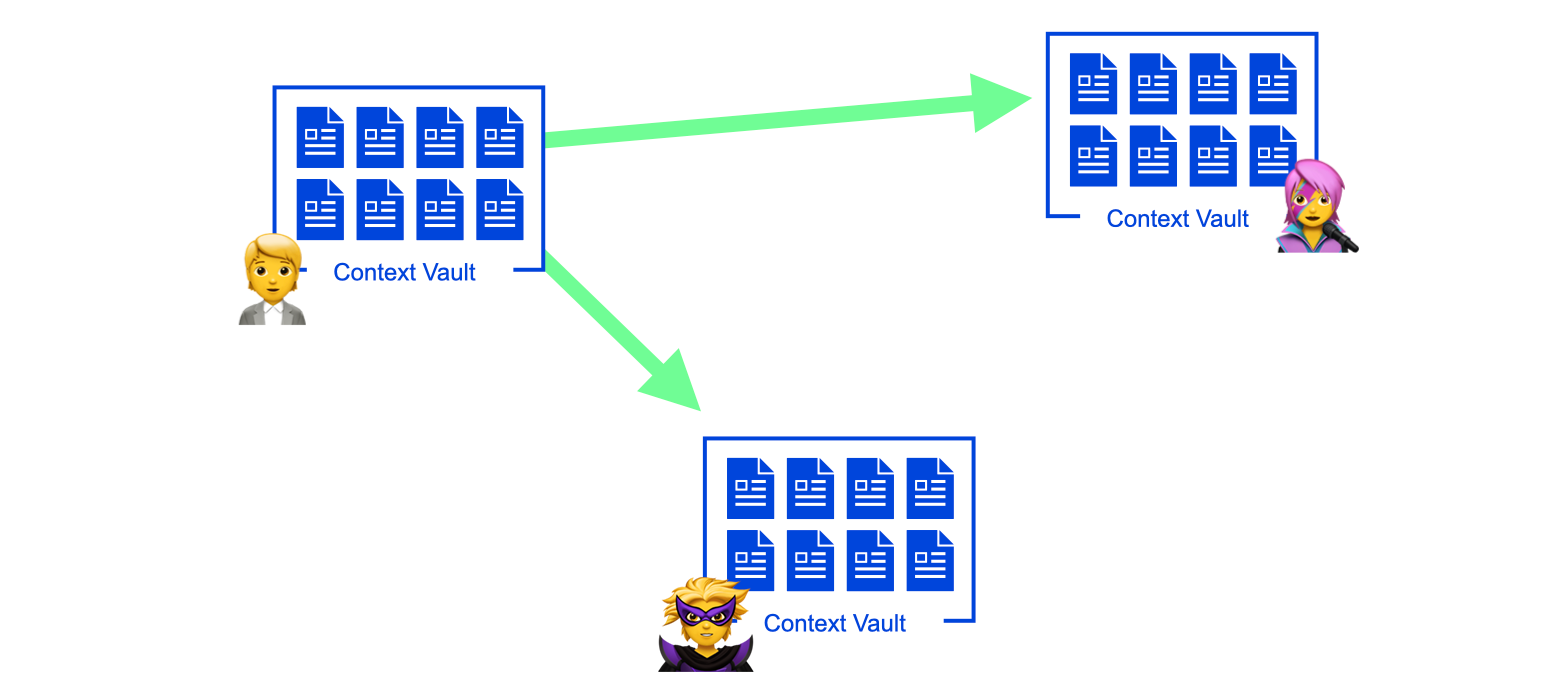
The last stage isn’t chronological, but rather an optional fork which could happen at any point after you’ve started working with AI as the second brain / context vault from Stage 3. Once your second brain holds your context, judgment, and way of working, you can publish it for other peoples’ AIs to connect to. This lets other people feed your context into their AI to draw on your expertise directly, without you in the room.
I wrote more about this on LinkedIn, and in fact I publish my own personal context vault / second brain at brianmadden.ai which you can connect your AI system to today.
This model will not just be for public influencers publishing content, but will also be used extensively within companies, as individual workers pull company-wide, department-level, or even individual worker feeds into their own AI context systems.
My important takeaways
A few closing thoughts on this.
First, as I mentioned in the opening, every worker is going to move through this roadmap at their own pace. I’m personally deeply into Phase 3 (AI as a cognitive extension) and just starting to move into Phase 4. I also am deeply in the optional Phase 7.
Second, I’ve learned that I’m not great at predicting timing, since the main thing I was wrong about for last year’s roadmap was the phases came about 3x faster than I expected. For this 2026 roadmap, I’m confident I’ll be deep into Phase 4 by the end of 2026 and probably starting to dip my toes into Phase 5. And I’m sure Phase 6 will be real by the end of 2027. (So, I guess I can say that this roadmap is for the next 18 months.)
Of course we need to keep in mind that “when AI can do a thing” and “when those capabilities are actually used by all workers” are two very different timelines. Even if everything in this post is technically possible by the end of next year, it will be many years before every worker is working this way.
In the meantime, use this updated roadmap to track your progression through the phases. In future posts I’ll go deeper on how to deliver various capabilities at each phase to your workers.
Read more & connect
Join the conversation and discuss this post on LinkedIn. You can find all my posts on my author page (or via RSS).
from Citrix Blogs https://ift.tt/IA9O1Bv
via IFTTT


No comments:
Post a Comment