We are delighted to welcome Khachatur Nazaretyan as ShapeBlue’s new Chief Technology Officer (CTO). With over 20 years of experience in IT and cloud infrastructure, Khachatur brings extensive expertise in enterprise cloud architecture, technology leadership and large-scale infrastructure transformation. We sit down with Khachatur to discuss his vision for ShapeBlue’s technology strategy, the evolving role of Apache CloudStack, and the trends shaping the future of cloud infrastructure, from digital sovereignty and open source to AI and Kubernetes. We also get to know the person behind the technology and what excites him most about this new chapter.
Could you introduce yourself and tell us a little about your journey to becoming CTO of ShapeBlue?
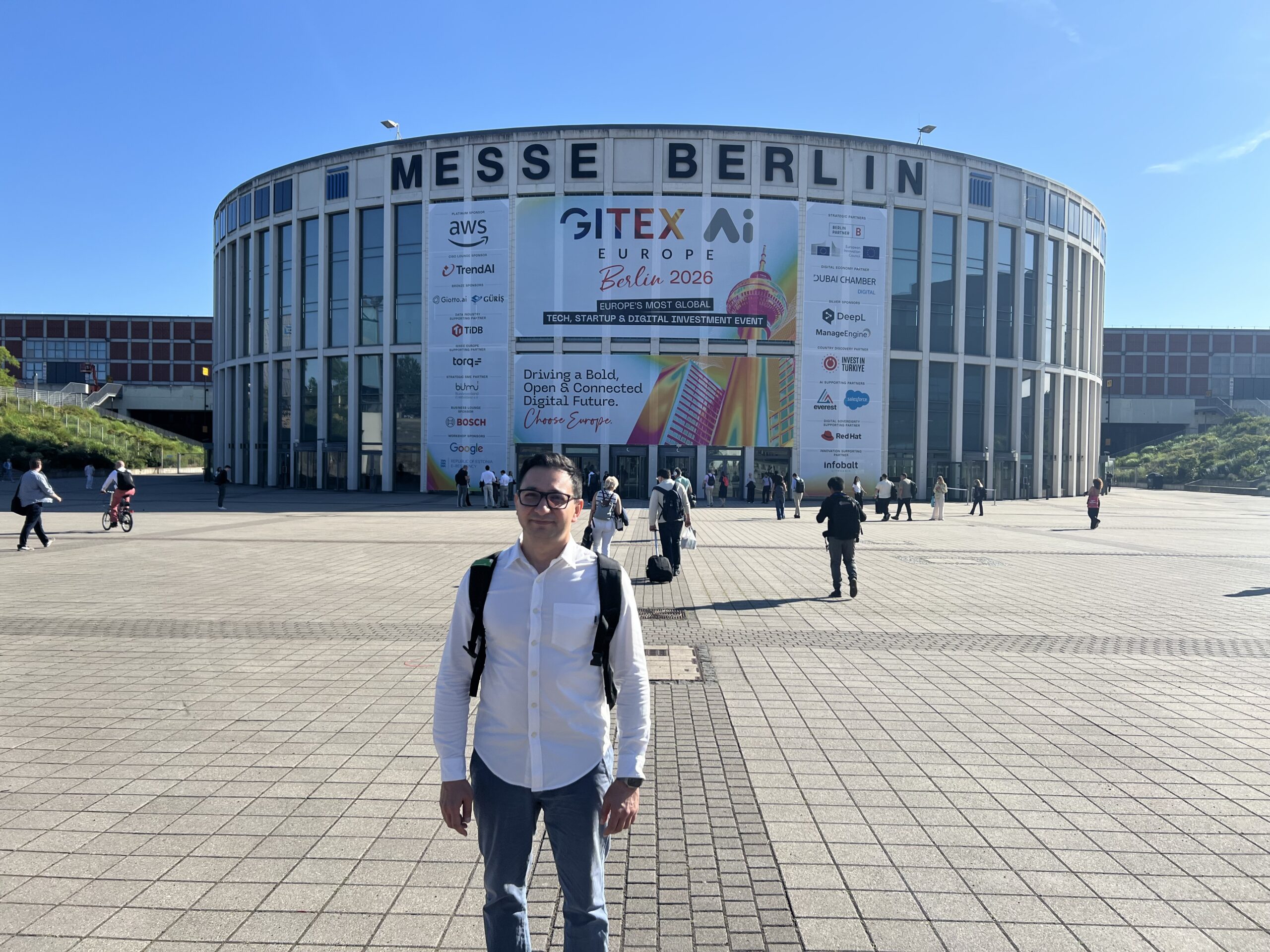
I’m Khachatur Nazaretyan, and I’ve recently joined ShapeBlue as CTO, where I set our global technology strategy and guide the direction of our engineering and product work around Apache CloudStack.
I’ve spent over twenty years in IT, most of it designing and operating large-scale cloud infrastructure. Before ShapeBlue, I led solution architecture at NTT DATA Business Solutions, running cross-border teams on complex enterprise cloud programmes.
My PhD in IT Economics gave me a lens I still use every day: technology decisions are ultimately business decisions. ShapeBlue felt like the natural next step, a company that proves every day that open source can run enterprise-grade clouds.
As you step into the CTO role, what will be your main areas of focus?
My focus comes down to three things. First, making Apache CloudStack the obvious, low-risk choice for organisations rethinking their virtualisation strategy. Most enterprises have decided to reduce their dependency on proprietary platforms, but very few have finished the journey, and migration risk is what holds them back. Second, continuing to mature the platform itself, so that what we learn from enterprise deployments flows back into the upstream project as real capabilities. Third, making sure CloudStack is ready for the workloads that will define the next decade: containers and AI. That means first-class Kubernetes integration, GPU-ready infrastructure and bringing AI into how clouds are operated. Underneath all three is a principle I care about: every technology decision should be measurable in business value for our customers.
What do you see as the CTO’s role in shaping ShapeBlue’s long-term technology strategy?
In an open-source company, the CTO doesn’t set strategy alone. Much of the roadmap is shaped together with our customers and the Apache CloudStack community. So I see my role as three parts: listening, deciding and translating. Listening to what customers, partners and our engineers see in the field. Deciding where to invest, which also means being clear about what we won’t do. And translating long-term technology bets into outcomes customers can measure, whether that’s lower total cost, less risk or more control over their own infrastructure. Good strategy is less about predicting the future and more about keeping your options open.
ShapeBlue has always been deeply involved in Apache CloudStack. How do you see that relationship evolving as the technology and the wider cloud market develop?
CloudStack is in ShapeBlue’s DNA, and that won’t change. What is changing is the market around it. A few years ago, CloudStack was mainly the choice of service providers. Today, enterprises and public-sector organisations are looking at it seriously, because they want control over their infrastructure, predictable costs and, increasingly, digital sovereignty. That raises the bar for all of us. I see our role evolving from being a major contributor to also being a bridge: bringing enterprise requirements into the community, and making the project easier to adopt for organisations that have never run open-source infrastructure before. The healthier and more diverse the community becomes, the stronger CloudStack becomes, and that’s good for everyone, including us.
What technology trends do you think will have the greatest impact on cloud infrastructure over the next few years?
I’d point to three. The first is sovereignty. Gartner expects sovereign cloud spending to grow by more than a third this year, with Europe growing fastest, and organisations everywhere are asking a simple question: who really controls my infrastructure? The second is AI moving closer to the data. Many organisations are finding that running AI in the public cloud is expensive, unpredictable and difficult to reconcile with data residency rules, so they’re building GPU capacity in private and hybrid clouds. The third is the convergence of virtual machines and containers. Kubernetes has become the standard for new applications, but most enterprises will run both for years, and they need one platform that handles both well. What connects all three is control, and that’s exactly where open infrastructure is strongest.
How do you see AI influencing cloud infrastructure and the way infrastructure platforms are developed and operated?
AI is changing infrastructure in two ways at once. On the operations side, we’re moving from dashboards and alerts towards AI agents that can diagnose an issue, propose a fix and, with the right guardrails, carry it out. Gartner expects most enterprises to use agentic AI in infrastructure operations by the end of the decade. But an AI agent is only as good as the knowledge and context it works with. Understanding how a platform really behaves in production, its edge cases, failure modes and best practices, is what turns a generic model into an operator you can trust. That’s where ShapeBlue’s more than a decade of hands-on CloudStack expertise becomes a real advantage. On the development side, AI is already part of how engineers write, test and review code. But AI amplifies whatever engineering culture you already have, good or bad. AI should make our engineers faster, never make our platform less reliable.
Open-source is central to ShapeBlue’s identity. How does working in an open-source environment influence the way you approach technology leadership?
It changes where your authority comes from. In an Apache project, nobody can simply instruct the community to accept a change. You earn influence through the quality of your contributions, the strength of your arguments and the trust you build over time. I try to lead the same way inside ShapeBlue. It also makes you more transparent. When your code, your design discussions and even your mistakes are public, you learn to explain your reasoning clearly and to welcome challenge rather than avoid it. I bring that into every decision: being open about why it was made, what drove it and why the alternatives were dropped. People don’t have to agree with every decision, but when they understand the reasoning behind it, they can trust it. And it encourages long-term thinking, because what we contribute today will be run by organisations around the world for years. In open source, you lead by earning trust, not by giving instructions.
What do you think makes a strong engineering culture, particularly in a distributed and employee-owned company like ShapeBlue?
For me, it starts with ownership and accountability, and at ShapeBlue ownership is literal. Every employee is a shareholder, so when an engineer goes the extra mile to get a release right or solve a customer’s problem properly, they’re investing in a company they own. That changes how people think about quality and about taking responsibility for the outcome. Being distributed adds another ingredient: clarity. When your team spans several countries and time zones, you can’t rely on corridor conversations. Decisions, priorities and context have to be written down and easy to find, so people can act independently without waiting for permission. I’ve led cross-border teams for many years, and the lesson was always the same: distance isn’t the problem, unclear expectations are. Strong engineering culture is ownership, accountability and clarity, built on trust.
What are you most excited about as you take on this new role?
The timing. For the first time in years, organisations are seriously questioning how they run their infrastructure, driven by cost, sovereignty and AI, and open source has a real answer to all three. ShapeBlue is in a unique position to deliver it: deep CloudStack expertise, a team that has spent years running CloudStack in demanding production environments, and an ownership model that lets us think long term rather than quarter to quarter. On a personal level, I’m excited to work where technology and business meet, helping customers make decisions that are both good engineering and good business. Moments like this don’t come often in infrastructure, and I’m glad to be part of this one.
And finally, who is Khachatur beyond technology and ShapeBlue?

Someone who recharges outdoors, ideally with my family. I live in Dresden, which is a wonderful base for hiking, with Saxon Switzerland practically on the doorstep, and some of our best family time is spent on the trails there. I also make a point of staying fit, whether that’s at the gym or out on my bike. And I’m a passionate Formula 1 fan. It’s engineering, strategy and teamwork under extreme pressure, where every decision is backed by data and a few milliseconds make the difference. So perhaps I never completely leave work behind. But being outdoors is where I find the space to think clearly, and some of my best ideas have come halfway up a hill rather than in a meeting room.
Interview by Antonia Shehova | ShapeBlue
The post ShapeBlue Leaders: Driving the Future of Open Cloud appeared first on ShapeBlue.
from CloudStack Consultancy & CloudStack... https://ift.tt/DHYygX6
via IFTTT


No comments:
Post a Comment